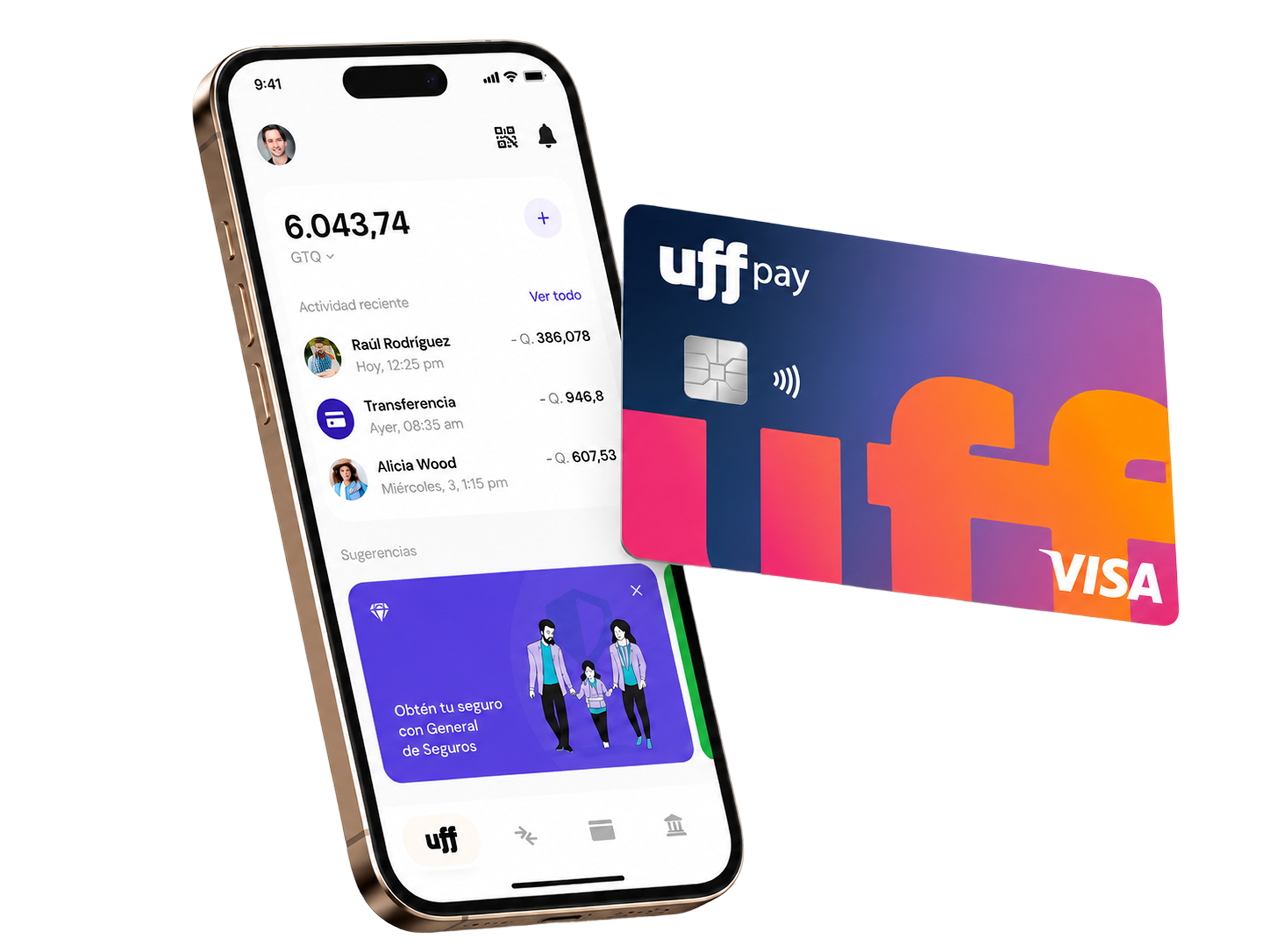
Send money to Guatemala and manage dollars and quetzales in one app. Visa cards are rolling out; Apple Pay and Google Wallet remain in certification.
Everything in one app
Your money, connected
Manage your money with our mobile wallet
Keep your dollars and quetzales in view, with balances and transaction history together in the app.
USD and GTQ balances
Currency conversion with a quote before you confirm
Bill splittingComing soon
Bank-account connectionsComing soon
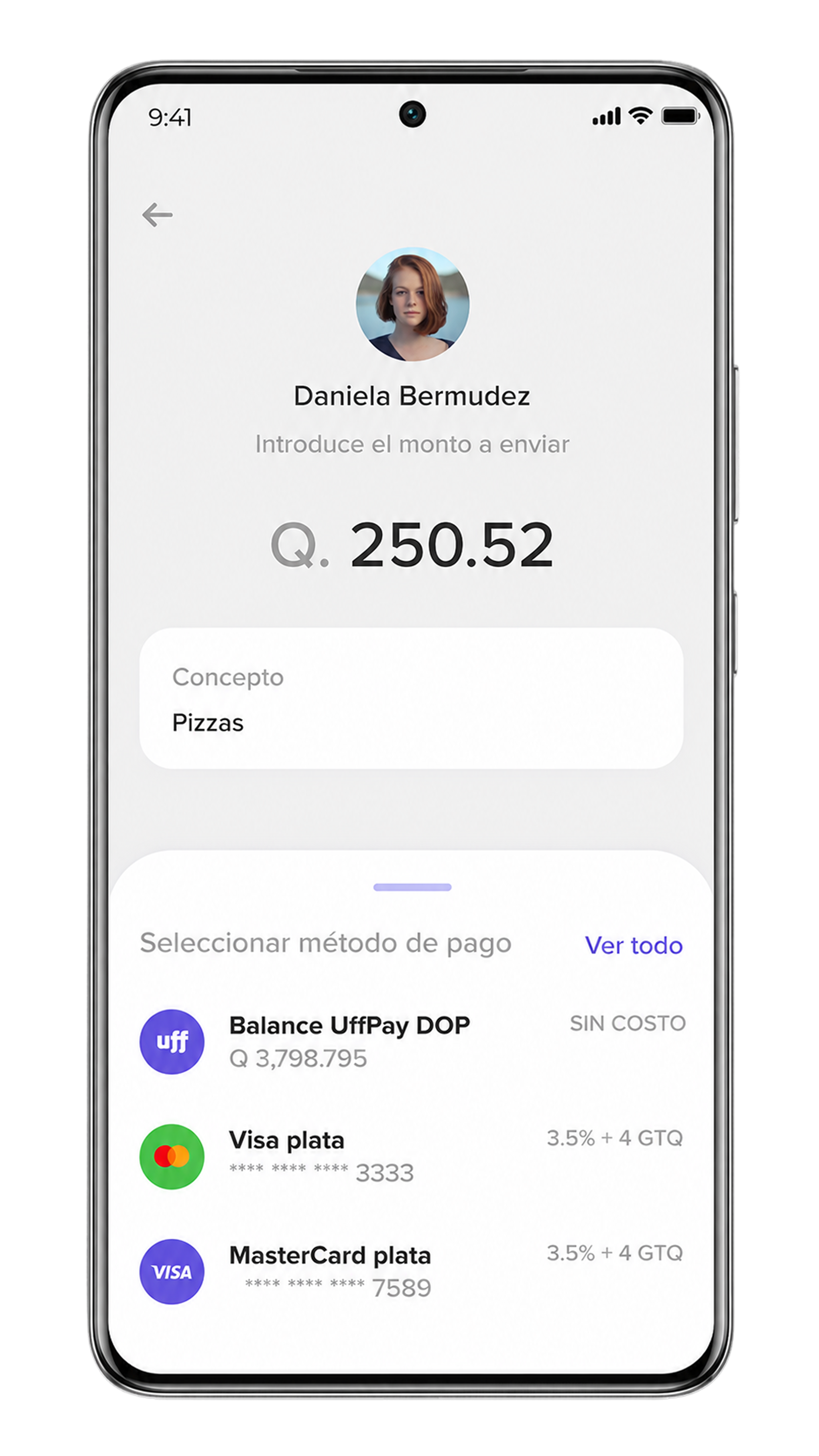
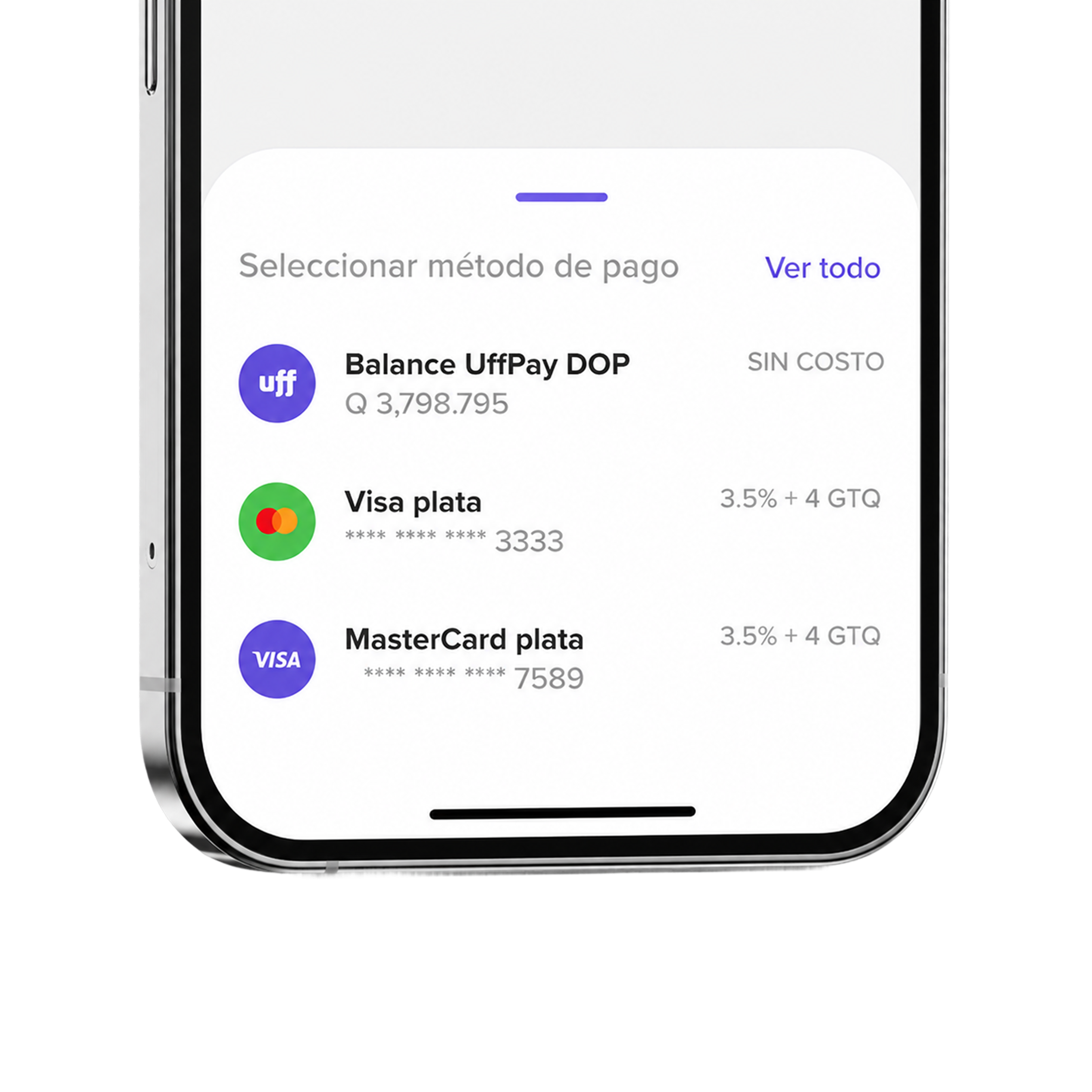
Earlier interface preview. Currency and funding labels may differ; the Guatemala wallet supports USD and GTQ.Explore the currencies+
Wallet currencies
USD$
GTQQ.
US dollars
Review the exchange rate in your quote before converting.
Instant, free transfers in Guatemala
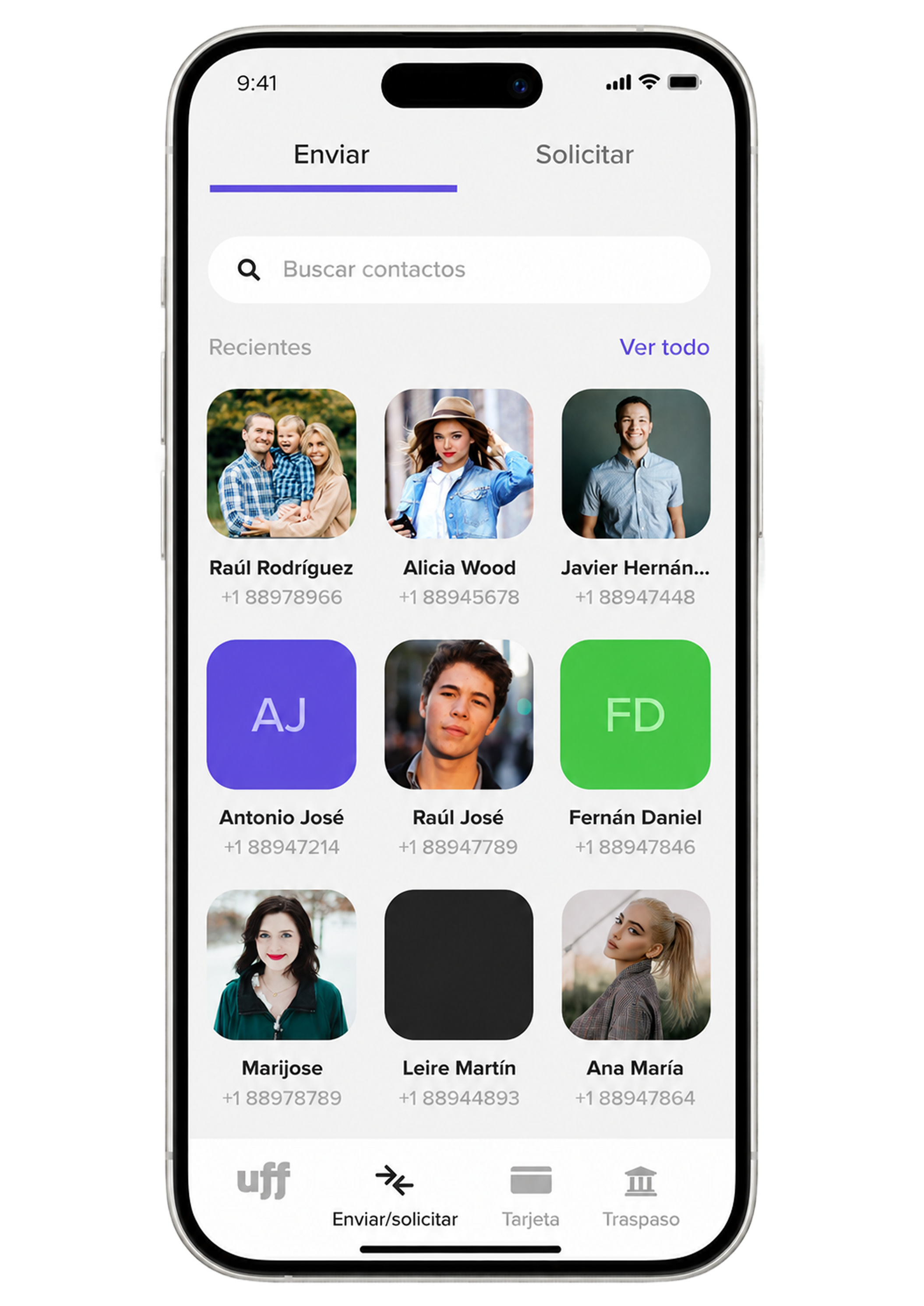
Send money instantly and at no cost between UffPay users within Guatemala. Choose your recipient, check the amount and confirm in the app.
Review the recipient and amount before sending
Verified accounts and account limits apply
Clear steps for your transfers
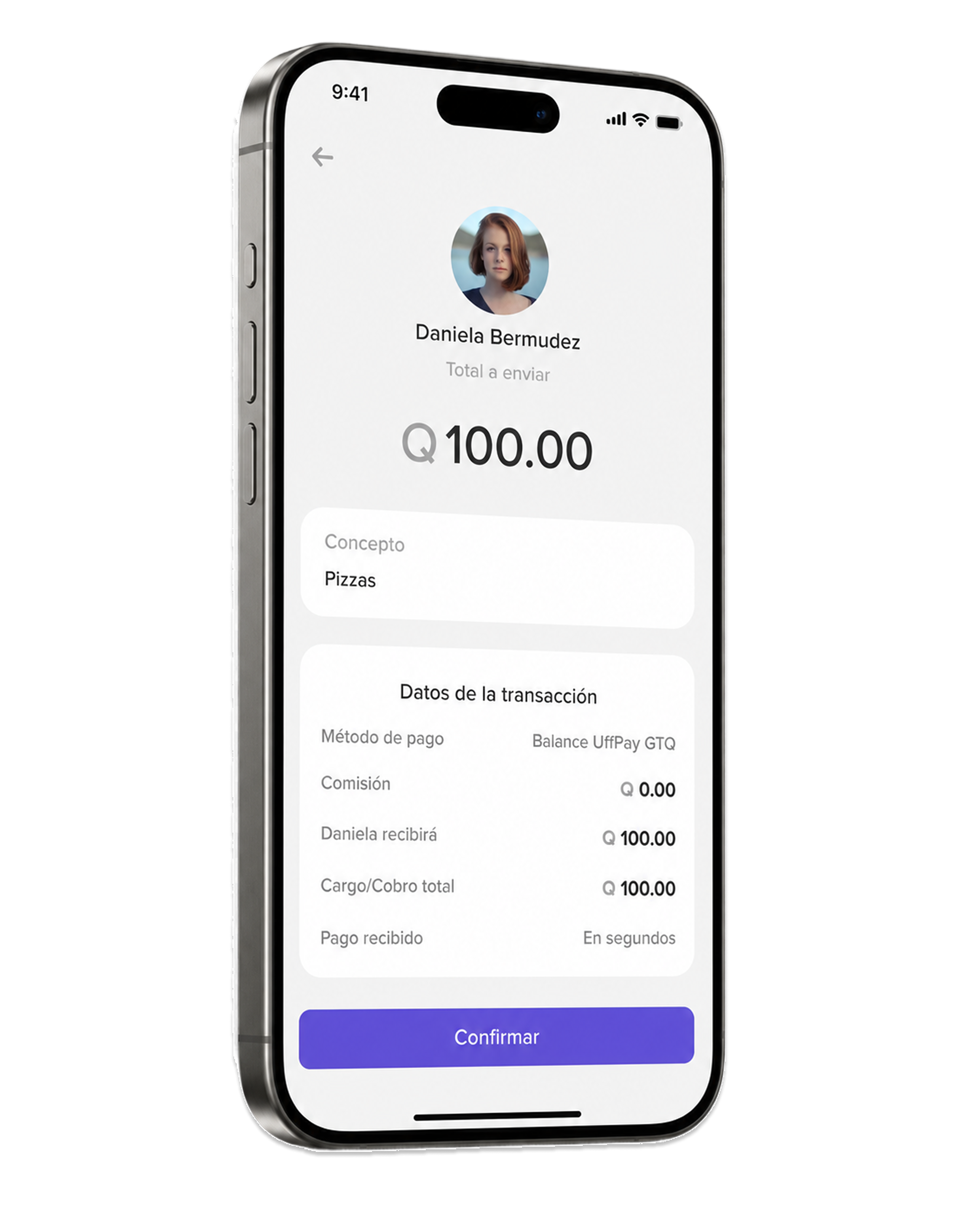
Review the recipient, amount, fees and expected availability before you confirm. Then follow the status in the app.
Guidance in English and Spanish
24/7 AI support, with human help during agent hours
Illustrative review screen. Your quote shows the applicable fees and expected availability.
Everyday payments with your UffPay Visa card
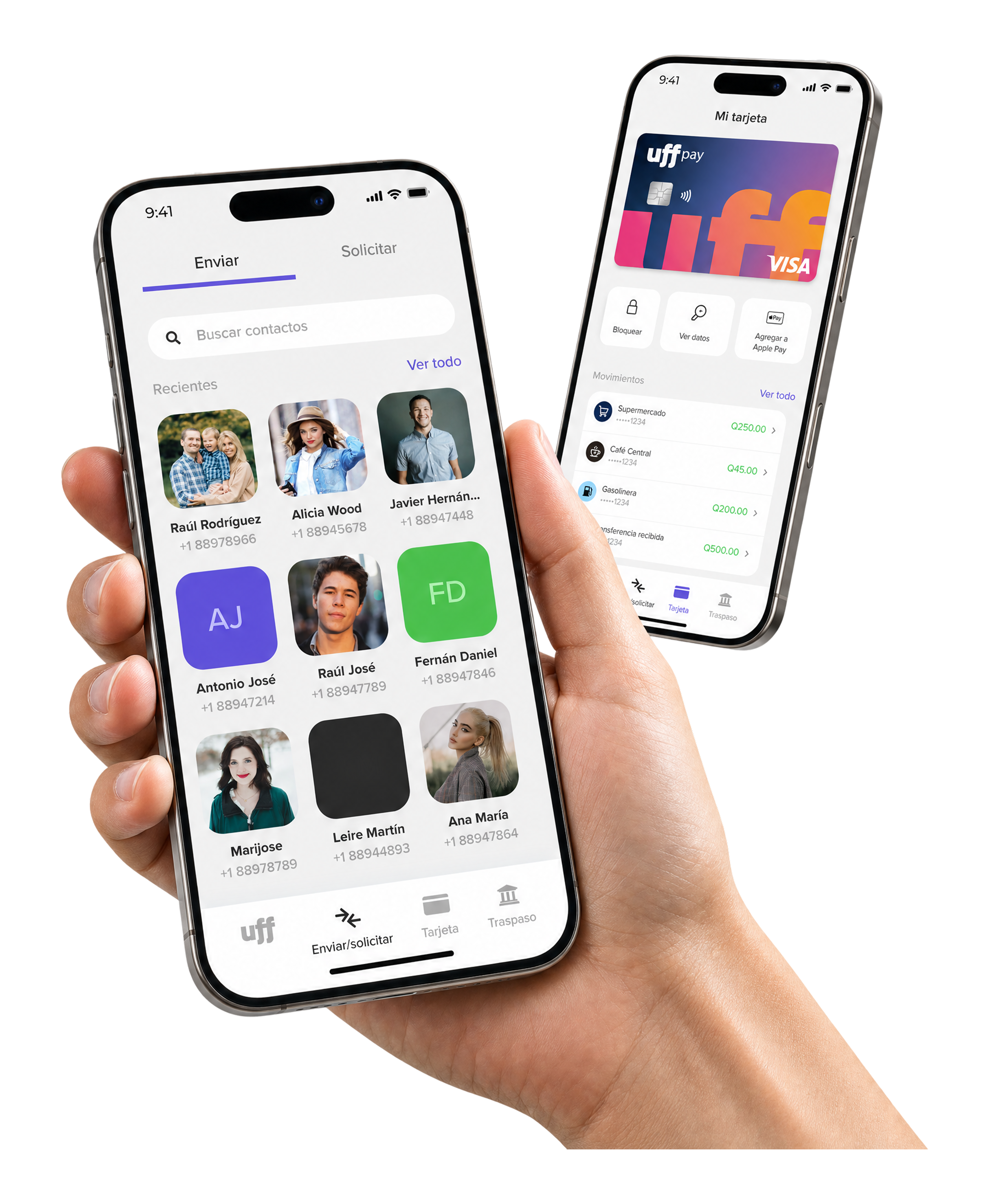
The UffPay Visa prepaid card is rolling out. Dock integration is complete and 1,000 physical cards are printed for distribution.
Physical card programRolling out
Apple Pay and Google WalletCertification in progress
Activation and use depend on issuer, network and customer requirements
App and card preview. Promotional offers shown are illustrative; digital-wallet support remains in certification.
Clear remittance fees
See the cost before you confirm. Your final quote includes the applicable exchange rate, fees and any other charges. Check your account limits in the app.
International remittance sender fee: 3.5% + $0.50
FX charge: 1% to 1.5% over the applicable base
UffPay receiver fee: $0 for international remittances
Earlier interface preview. Current remittance sender fee: 3.5% + $0.50; FX and other charges are separate.
Explore the tools
Fees, transfers and what’s next
Remittance fee · example
You send · USD$200.00
Sender fee3.5% + $0.50$7.50
Currency conversion and other applicable charges are separate.
Know your fees
A $200 international remittance has a $7.50 sender fee. FX charges of 1% to 1.5% and any other applicable charges are separate. Check the quote before you confirm.
Transfer steps · preview
Choose who receives it
Your transfer, step by step
Transfers between UffPay users within Guatemala are instant and free. International remittance timing depends on the payment route, verification and partner processing.
Split a bill · exampleComing soon
$120.00 bill · USD$60.00per person · 2 people
Split costs with friends
Bill splitting is coming soon and is not yet available in the app. Preview how a $120 bill could be shared equally between two, three or four people.
Explore the pricing
Your remittance fee, explained
Move the slider to see the published USD sender fee for international remittances. Currency conversion is separate: the FX charge is 1% to 1.5% over the applicable base rate. The final quote includes the rate and any other applicable charges.
$USD
Try $25 to $1,000.
$25$1,000
Two parts. One sender fee
Percentage component 3.5%
$7.00
Fixed component
$0.50
See how the percentage and fixed charge make up the sender fee.
Sender-fee breakdown
Transfer amount$200.00
Sender fee3.5% + $0.50$7.50
Amount + sender fee$207.50
Sender fee as % of transfer amount: 3.75%
Before FX and other applicable charges
Illustration only, not a transaction quote or a limit. USD 200 × 3.5% + USD 0.50 = USD 7.50. This calculator excludes FX and other applicable charges. UffPay receiver fee for international remittances: USD 0.
Security and support at every step
UffPay is a financial technology company, not a bank, and does not itself provide insured deposits. Explore how verification, support and account conditions work.
Transaction security+
UffPay protects your transfers and data with modern security controls, clear confirmations, and unusual activity monitoring.
24/7 AI customer service+
Our bilingual AI assistant is available 24/7 in English and Spanish. You can request human assistance. Human support follows agent hours, and a response estimate is provided once a support case is confirmed.
Identity verification+
Every account starts with a verified identity. We capture and validate your official document, run Guatemala RENAP identity workflows and complete due diligence before the account can move money. Only verified users can transact.
AI-assisted transaction monitoring+
BlackEagle AI brings together transaction rules and unusual-pattern analysis. Alerts can lead to additional verification or human review; a risk signal is not a finding of fraud.
Account and transfer limits+
Limits depend on the product, funding method, period, risk profile and partner terms. Complete the required verification and check the limits shown in your app before transacting.
How your funds are held+
UffPay is a financial technology company, not a bank, and does not itself provide insured deposits. Any deposit insurance through a partner bank depends on the account structure, ownership, records and applicable conditions. A bank’s FDIC status does not insure every wallet balance or protect against UffPay’s failure.
Get the UffPay app
Download for iOS or Android and complete your account verification to get started.